Melody Zekey
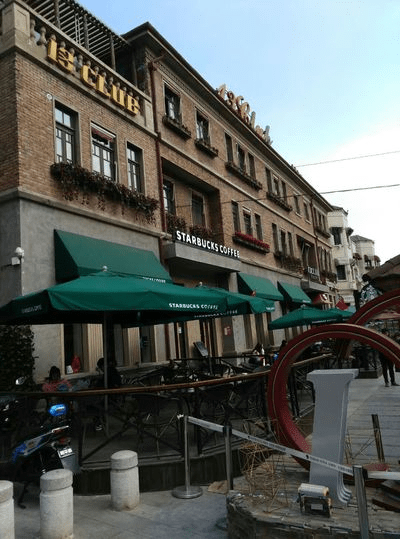
We had a pleasant walk through this area while we walked through many of the attractions of Tianjin. There’s lots of nice restaurants and bars lining the pedestrian streets of this area and Italian replica architecture and statues. Families seemed be enjoying this area and it is pleasant enough to go on a date to as well.
Tianjin lies about 35 minutes by speed train from Beijing South Railway Station.
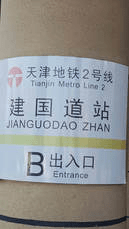
Within the beautiful port city of Tianjin lies the Italian inspired street. It is situated not very far from the main Tianjin Railway Station on Metro line 2. As soon as you are out on exit B, the sign leading into the street is on the left.
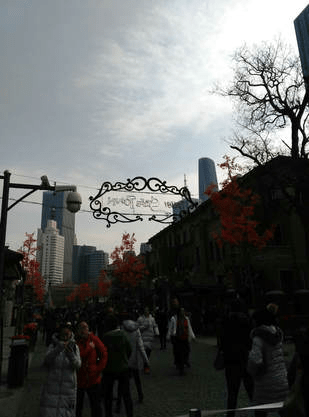
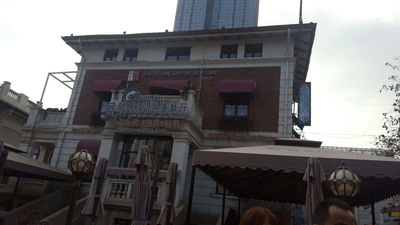
The architecture of the buildings is Italian inspired. One local man said the apartments in the area were very expensive and only the rich could afford to live there.
Tianjin ‘s Italian Style Town revitalized the former concession’s neighborhood that was once inhabited by hundreds, if not thousands, of colonialists from Italy. Today this vibrant area is especially directed towards tourists from within China and abroad. Italian Style Town (also known as ‘Italian Style Street‘) was first constructed in the early 20th century and now offers a plethora of westernized restaurants, boutique shops, bars, and outdoor bazaars – here’s our guide to the best.
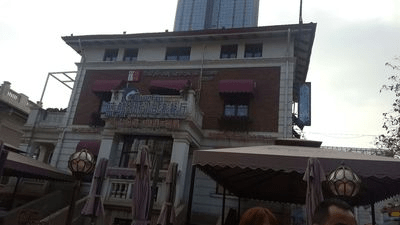
Italian Style Town, formerly known as the Italian concession of colonial-era Tianjin, is situated right along Haihe River. It’s not solely dedicated to Italian food and culture, as other European nationality restaurants like German and French establishments are also on site. The area is commonly known for its historical residences, lavish yet authentic European cuisines, Western art displays, and chic bars. Italian Style Town’s name is used interchangeably with with ‘Italian Style Street’ since it’s a neighborhood and not one street. Just across the Haihe River is Ancient Culture Street and Financial Road.
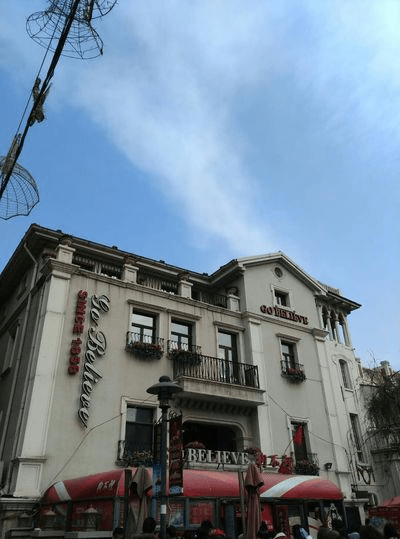
There are also some restaurants, pizza houses and bars selling some famous Italian brands. First designated to the Italian colonists of Tianjin in 1902, this concession was occupied by Italy until the end of World War II, and in 1946, was finally handed over to local Chinese authorities. With the intention of revamping the once thriving area into a tourist hub, in 1999 Tianjin’s city government entered into an agreement with a construction corporation to protect and redevelop the Italian concession into ‘Italian Style Town’. The renovation was completed in 2005 and opened to the public in 2008. Today, Italian Style Town is one Tianjin’s most favored attractions and in 2013 it garnered plaudits as a class 4A tourist destination.
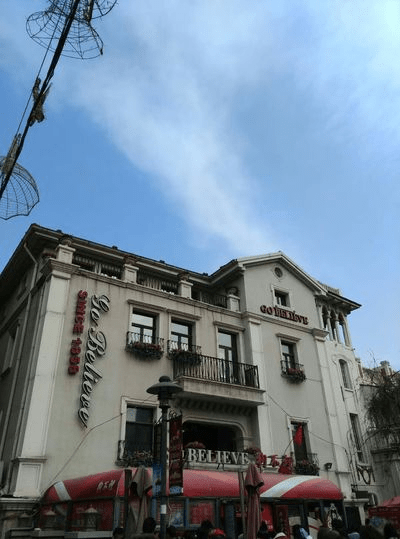
At the epicenter of Italian Style Town is the famed Marco Polo Plaza, and the entire town is said to resemble the shape of a chessboard, squarely checkered with establishments and streets. The Free Path is the Street’s sole pedestrian-friendly walkway and is marked with streetlamps, green trees, and refurbished fences from the old era. Its original European buildings are what give the Street its true Italian feel.
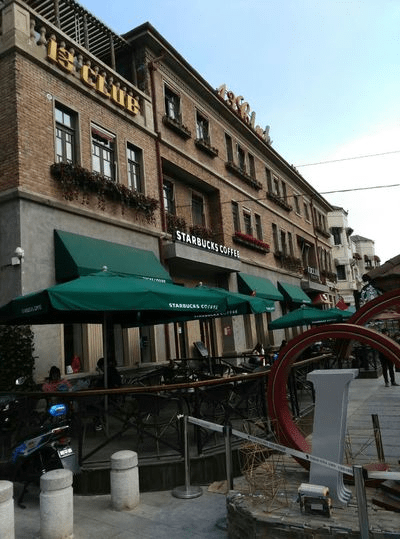
Lazy to walk around, no need to worry. You can pay for the vintage carriage to take you around. The main driver of tourists is not only the pursuit of authentic, imported-ingredient rich Italian cuisines like pizza and pasta, but also Italian cultural live events such as musical performances, clothing and art exhibitions. Italian Style Street is among Tianjin’s only neighborhoods that are friendly to all-nighters, as some of its bars stay open until the small hours.
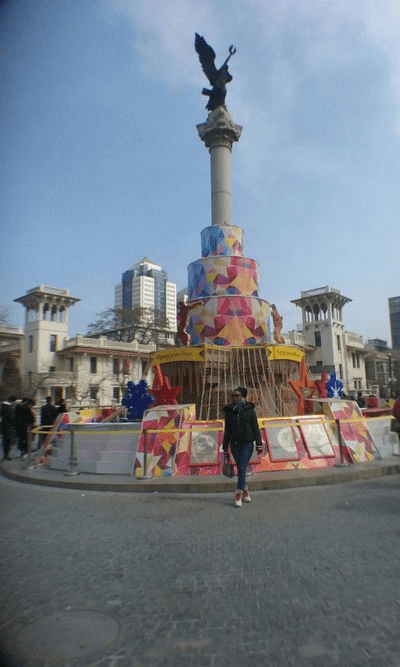
The obvious draw of Tianjin’s Italian Style Town is its food scene, with both ingredients and even chefs hailing from Italy itself. Some of the city’s best dishes are served right here, but are more on the expensive side. Venezia Club Italian Restaurant is highly regarded for its plates of pasta while Brasserie FLO serves high-end French and European dishes.


A number of of Italian Style Town’s classic buildings housed some of the most famous figureheads in Tianjin history. Former residences include those of Liang Qichao, Feng Guozhang, Cao Yu, Hua Shikui, the First Worker Cultural Palace and the Italian Military Barracks.

Our Lady of Victory Church also known as Wanghailou Church is a Roman Catholic church located in Tianjin, China, which formerly served as the Cathedral church for the Tianjin diocese. It is one of the oldest churches in Tianjin. In 1773, salt merchants in Tianjin financed a construction of a 3-storey structure on this site, which was used as a temporary residence by the Emperor. The Qianlong Emperor bestowed upon it the name ‘Haihe building’. In 1862, French missionary priest Jean-Joseph-Léon Talmier, through negotiations between the French consulate in Tianjin and Qing minister Chonghou, obtained a portion of land in Tianjin that included this site.
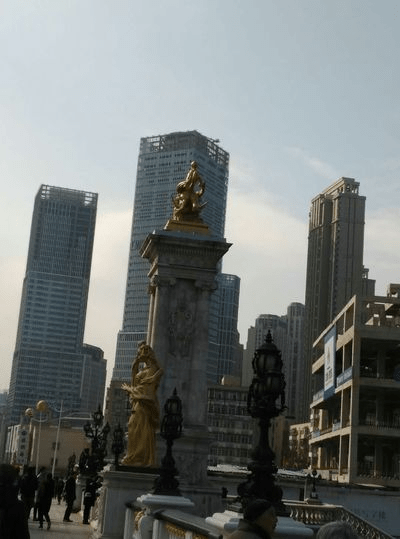
In 1869, the old construction was demolished, and a church was built in its place dedicated to Our Lady of Victory. In 1870, the Tianjin massacre occurred, and the church was destroyed along with other Catholic sites in Tianjin. In 1897, the church was rebuilt using reparations funds from the Qing government. In 1900, the church was destroyed a second time when the Boxers arrived in Tianjin and attacked foreigners as well as Chinese Catholics. In 1903, the church was rebuilt again using reparations funds from the Qing government.
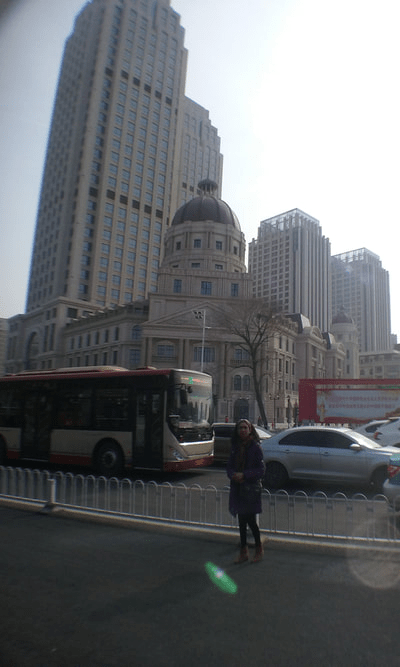
In 1912 the Diocese of Tianjin was officially established by Rome and Our Lady of Victory was made the cathedral for the diocese. In 1916, St Joseph’s Cathedral replaced Our Lady of Victory as the cathedral. In 1949, it was closed following the Communist revolution. It was partially re-opened later. During the Cultural Revolution, it was vandalized by Red Guards. It was heavily damaged during the 1976 Tangshan earthquake. The Tianjin municipal government rebuilt the church in 1983.
i recommend this city any time. I had a lot of fun exploring around. It’s always advisable to use public transport to have a clear feel of the city.
See you in my next blog.
 ZEKEY MEDIA ONLINE
Leave a Reply