In a noteworthy departure from traditional marital norms, an increasing number of Chinese men are turning to a unique matchmaking service that challenges conventional marriage practices, offering potential relief from the burdens of being a traditional husband. The Jindianzi matchmaking agency in Hangzhou’s Xiaoshan district, Zhejiang province, has gained popularity for its “live-in son-in-law” service, connecting single men with affluent women. However, this unconventional approach comes with a caveat – the service strictly excludes lazy applicants.
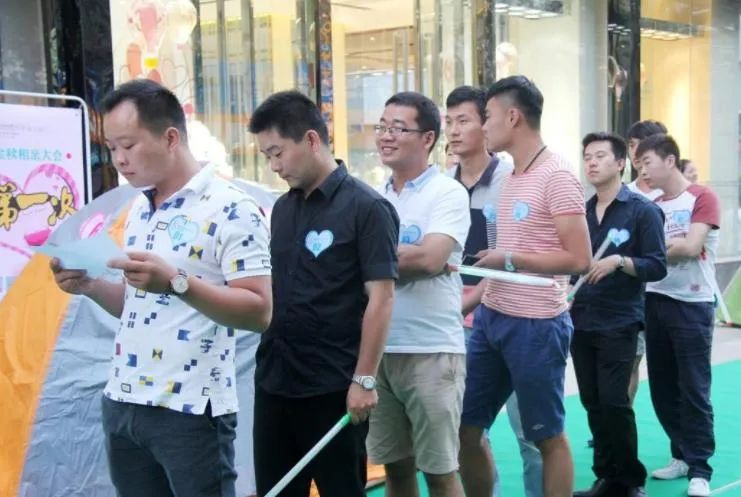
Contrary to the customary practice of a woman marrying into the man’s family in China, the “live-in son-in-law” service reverses this dynamic. Under this arrangement, the husband relocates to the wife’s property, and any children adopt her surname, typically that of the father-in-law. Though the concept has recently gained nationwide traction, it has been a longstanding tradition in Xiaoshan.
Xiaoshan, as one of China’s wealthiest cities, leads in gross domestic product among Hangzhou’s districts. The popularity of the “live-in son-in-law” service can be attributed to multiple factors. Traditionally, parents in the city resisted allowing their grandchildren to take on the surname of another family, symbolizing the relinquishing of their wealth. Moreover, the practice has gained momentum due to financial incentives, as adding the husband’s name to the woman’s household results in increased compensation for relocation.

A slogan displayed prominently at the agency reads: “Break the tradition of women marrying into men’s families, and start a new national campaign that marries men into women’s families.” This reflects a shift from embedded traditional gender roles in the language associated with marriage.
The Jindianzi agency, founded by Li Jiyan in 1999, enforces stringent criteria for potential candidates. Men must earn over 100,000 yuan (US$14,000) annually, be taller than 170cm, possess a credit score of at least 560, and have no criminal record or tattoos. The competition for entry is fierce, with the agency receiving 20 to 30 applications daily, demanding a 15,000 yuan registration fee for a two-year membership.

Interestingly, Li highlighted a growing trend of men, including university undergraduates, applying to become live-in sons-in-law, seeking a wealthy spouse to alleviate the pressure of intense work and financial success. The agency particularly favors candidates with stable positions in state-owned companies.
While the phenomenon has garnered support on Chinese social media, some critics argue that it perpetuates traditional gender hierarchies. Despite diverse opinions, the rise of “live-in son-in-laws” highlights evolving perspectives on marriage and societal expectations in China.
NETIZENS COMMENTS
It’s interesting that requirements DON’T list “being single” as a necessity lol. Joking around but the saying “don’t let your wife stop you from finding love” may apply.
As long as both the man and woman are happy living under the same roof who are we to stop them from forming a family. My only fear and concern is the man will be pinned down and live under tremendous pressure both from the woman and his in laws. Don’t forget when you live under their shadow and money talks bullshit walks, how can the man stand tall? mental health will creep in
Why does someone need to join the other family? Can husband and wife not create their own family together? I guess, that’s the difference between collectivism and individualism.
You can tell the entrance criteria were written by a woman. Minimum height, minimum income, additional laundry list…. If this was for women, the requirements would be ‘has a pulse’
One more way to emasculate.
 ZEKEY MEDIA ONLINE
Leave a Reply